On November 20, 2026, John D'Amore, a co-editor of the HL7 International Patient Summary implementation guide, walked students in HL7's Break the Code program through two standards that do most of the work behind CMS's "Kill the Clipboard" pledge: the International Patient Summary (IPS) and SMART Health Links. The recording is public. His slides are licensed CC BY 4.0, and we use several of them below, with credit.
The talk is a good moment to put the pieces in one place. The IPS is the payload: a short, structured summary of what a new clinician needs to know. A SMART Health Link is the envelope: a link, usually shown as a QR code, to an encrypted copy of that summary, which a patient can hand to anyone. Every fact below is checked against the HL7 specifications, CMS or a peer-reviewed paper. The talk sets the frame.
The clipboard problem, in one slide
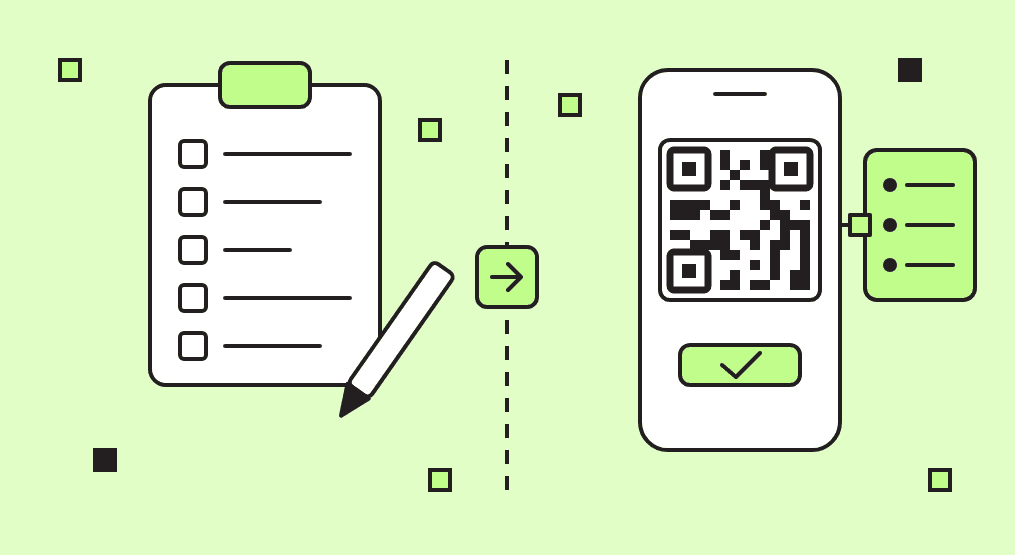
D'Amore opened with why the clipboard survives in 2026. Providers already receive C-CDA documents from past encounters, but they don't import all of it, because of trust and recency. His slide lists three challenges: nobody gets paid more for a better check-in, physicians and hospitals rarely pick EHRs for interoperability, and there wasn't a cheap, easy technology for patients to bring their own data. Standards can only fix the third. That is the part the IPS and SMART Health Links address.
The payload: the International Patient Summary
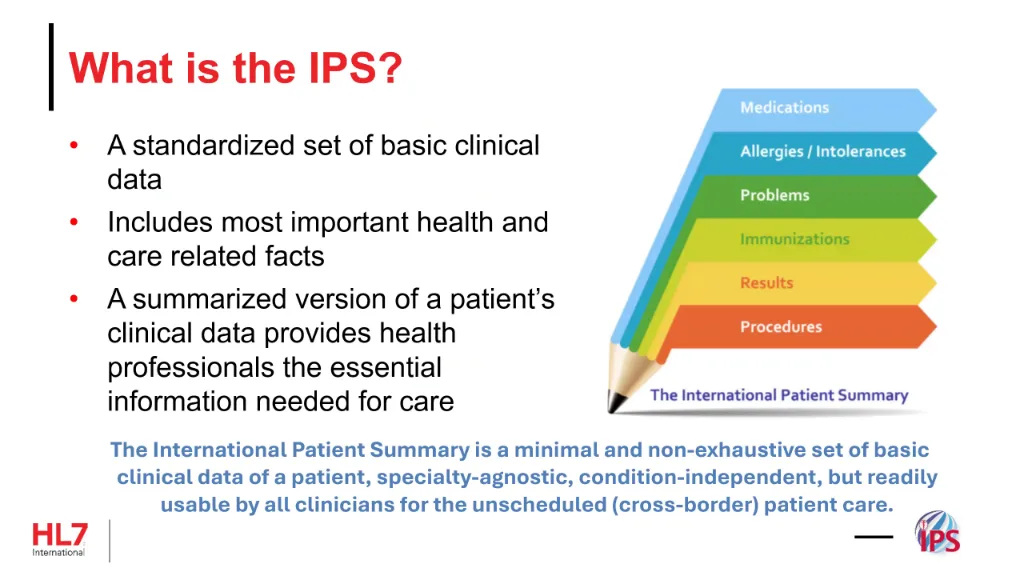 Slide: John D'Amore, "QR Codes to Share HL7 FHIR Patient Summaries," November 20, 2026. © Health Level Seven International, CC BY 4.0.
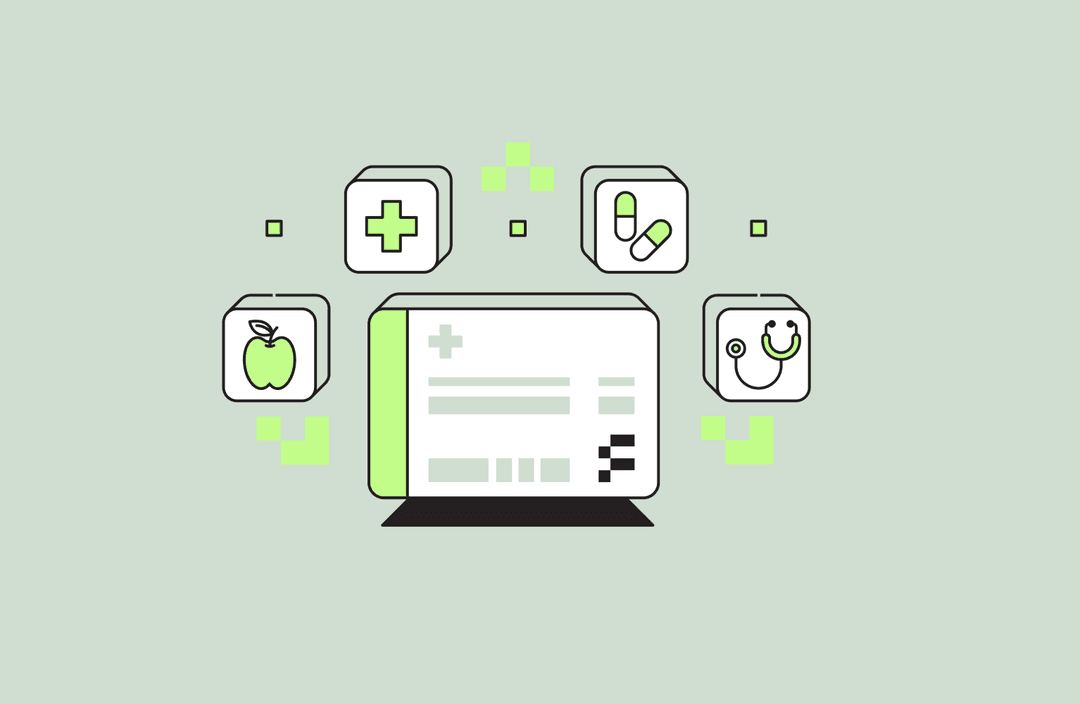
The IPS is a FHIR document. It is a Bundle of type document whose first entry is a Composition, and the Composition organizes the summary into sections. Each section carries human-readable narrative plus references to the structured resources behind it, so a receiver that can't parse every resource can still show a clinician the summary.
The IPS implementation guide (version 2.0.1, STU 2) defines 16 sections in its Composition profile:
| Status | Sections |
|---|---|
| Required | Problems; Allergies and intolerances; Medication summary |
| Optional | Immunizations; Results; History of procedures; Medical devices; Advance directives; Alerts; Functional status; History of past problems; History of pregnancy; Patient story; Plan of care; Social history; Vital signs |
The design goal is a summary, not a record dump. The definition on D'Amore's slide calls the IPS "a minimal and non-exhaustive set of basic clinical data of a patient, specialty-agnostic, condition-independent," for unscheduled care. "Cross-border" in that definition doesn't have to mean a country line. In the talk, D'Amore described any new care setting as a border, including a new practice down the street.
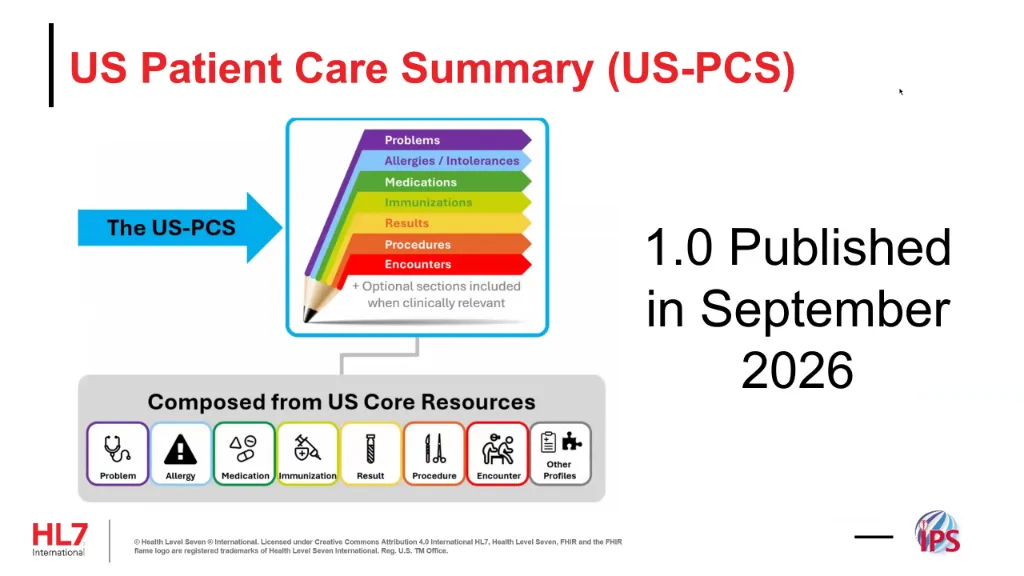 Slide: John D'Amore, November 20, 2026. © Health Level Seven International, CC BY 4.0.
The envelope: SMART Health Links
SMART Health Cards came first. During COVID, they put a signed FHIR record of vaccinations directly into a QR code. D'Amore's slides list their limits: only 2 to 3 KB of data fits in the code, scanning needed specialized apps, and the code couldn't change when the data did.
SMART Health Links fix that by moving the data out of the code. The SMART Health Cards and Links implementation guide (version 1.0.0, STU 1) specifies the format:
- The link is
shlink:/followed by a base64url-encoded JSON payload, optionally prefixed with a viewer URL ending in#. Any phone browser can open the viewer. A FHIR-ready system can skip the viewer and read the payload. - The payload holds a manifest URL with at least 256 bits of entropy, and a decryption
keyof 43 characters (32 random bytes, base64url-encoded). - Optional fields include
exp(an expiration hint),label, andflag:Lfor a long-term link whose content can change,Pwhen a passcode is required, andUfor direct access to a single encrypted file.Ucan't be combined withP. - The payload can be any data. An IPS is the common case for check-in, but the same link can carry a lab result, an insurance card or anything else in FHIR.
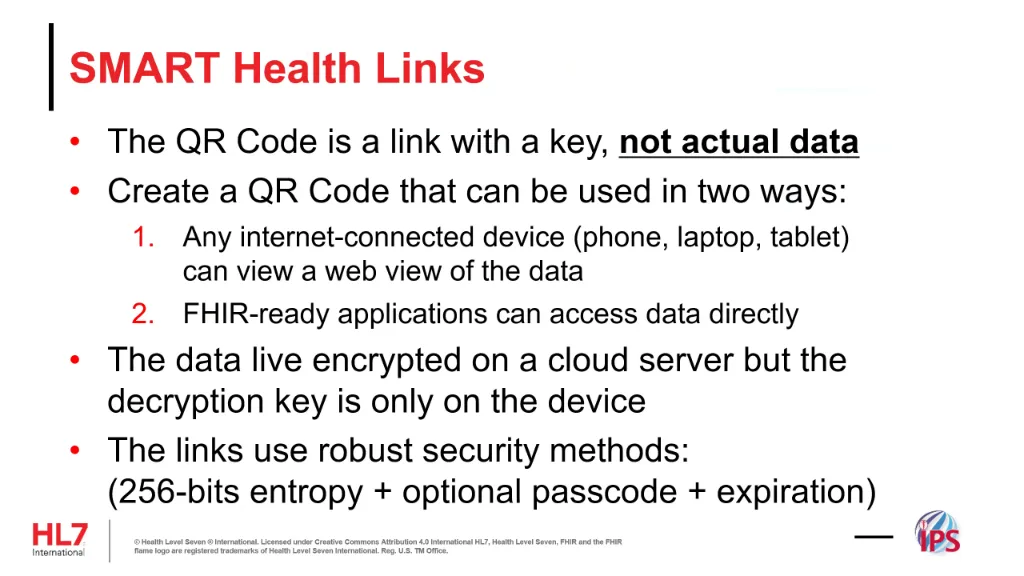 Slide: John D'Amore, November 20, 2026. © Health Level Seven International, CC BY 4.0.
To see one end to end, D'Amore's talk decoded a demo link from the University of Washington's My Health Summary sandbox, which builds IPS documents and shares them as SMART Health Links. The part before # is the viewer URL. The part after shlink:/ decodes to JSON with the manifest URL, an expiration, the P flag and the key.
Where it is in use
A peer-reviewed case report in Applied Clinical Informatics, From Pandemic Response to Kill the Clipboard, by D'Amore and colleagues (published online July 10, 2026), describes four implementations of patient-mediated sharing with QR codes, FHIR, the IPS and SMART Health Links, across the United States, Canada and the Hajj pilgrimage. It reports on technical readiness, patient adoption and emergency preparedness, and concludes that preliminary evidence suggests the approach can better inform care.
In the US, the driver is CMS. Its Kill the Clipboard pledge commits signers to "empower patients to retrieve their health records from CMS Aligned Networks or personal health record apps and share them with providers via QR codes or Smart Health Cards/Links using FHIR bundles." Flexpa is on the early adopter list.
CMS now also publishes an implementation guide for providers that want to accept these codes at check-in. It tells practices the QR code "isn't an ordinary barcode, and it doesn't contain their medical records," and lays out two paths: the EHR's built-in reader, which CMS lists as available from several vendors and in development at others, or an independent reader. The independent reader can be community-hosted by ecosystem partners, or self-hosted from CMS's free, MIT-licensed open-source code.
What it means for developers
Build the summary as an IPS, not a custom JSON
D'Amore's advice to students was blunt: making a QR code that opens a web page is easy, but if the receiving system can't import the data, the clinician is still re-typing it. Emit a conformant IPS Bundle (and, for US receivers, check it against US-PCS) so a FHIR-ready EHR can take the data, not just display it.
Get the three required sections right first
Problems, allergies and medications are required in both the IPS and US-PCS. They can't be left out, so populate them with what's current and clinically relevant, and say explicitly when there's nothing to show. The narrative matters too: it is what a receiver displays when it can't map a resource.
Treat the link like a credential
The link is the key. Use expirations, add a passcode when the link travels over a channel you don't control, and support revocation. CMS's guide tells providers the link "can be revoked by the patient at any time," so your app should make that possible.
Let patients choose what to share
A summary for a new dermatologist doesn't need social history. Give patients a way to choose sections before they share.
Where Flexpa fits
Flexpa's Records API generates an International Patient Summary for a connected patient with Patient/$summary. It returns a FHIR document Bundle organized into 14 standardized sections, with a narrative table in each, an included PDF rendering for systems that don't read FHIR, and empty sections marked unavailable. The _section parameter limits the summary to the sections a patient chooses, and marks the rest as withheld.
Our SMART Health Links API then packages any FHIR payload, an IPS included, into a shlink:/ link and QR code, with passcodes, expirations, revocation and an audit trail. Flexpa reached production on Kill the Clipboard on April 9, 2026, as one of the first wave of CMS Aligned Network adopters. For background, see What is the International Patient Summary?, SMART Health Links, explained, and our posts on the SMART Health Links API and returning visit records with SMART Health Links.
Frequently asked questions
What is the International Patient Summary?
An HL7 FHIR document that summarizes a patient's essential clinical information for a clinician who hasn't seen them before. The current version, 2.0.1 (STU 2), defines 16 sections. Problems, allergies and intolerances, and medications are required.
How is a SMART Health Link different from a SMART Health Card?
A SMART Health Card puts signed data inside the QR code, which limits it to a few kilobytes and a fixed snapshot. A SMART Health Link puts a pointer and a decryption key in the code. The data lives encrypted on a server, can be larger, and with the L flag can be updated over time.
Does the QR code contain my medical records?
No. It contains a link with a manifest URL and a decryption key. The records are stored encrypted elsewhere. CMS's provider guide makes the same point: a photo of the code is not a copy of the chart.
What is US-PCS?
The US Patient Care Summary, HL7's US profile of the patient summary. Version 1.0.0 (STU 1) published on September 15, 2026. It keeps the IPS's three required sections and adds encounters, immunizations, procedures and results as must-support sections, composed from US Core.
How do providers read these codes?
CMS's provider guide describes two ways: the EHR's built-in reader where the vendor offers one, or an independent reader, either hosted by an ecosystem partner or self-hosted from CMS's open-source code.
Sources
- HL7 International, International Patient Summary Implementation Guide 2.0.1 (STU 2), including the IPS Composition profile
- HL7 International, US Patient Care Summary (US-PCS) Implementation Guide 1.0.0 (STU 1), published September 15, 2026
- HL7 International, SMART Health Cards and Links Implementation Guide 1.0.0 (STU 1), Health Links specification
- CMS, Patient Facing Apps: Kill the Clipboard
- CMS, Provider Kill the Clipboard Guide
- D'Amore JD, Vallapu ER, Samal L, Karras BT, Lober WB, From Pandemic Response to Kill the Clipboard: Patient-Controlled Sharing of Health Data Using International Patient Summary (IPS) and QR codes, Applied Clinical Informatics, 2026
- John D'Amore, "QR Codes to Share HL7 FHIR Patient Summaries: How It Works and Case Studies," HL7 Break the Code, November 20, 2026 (recording). Slides © Health Level Seven International, licensed under CC BY 4.0.
- University of Washington, My Health Summary sandbox
- Flexpa docs, Records API: Patient $summary and SMART Health Links API
This post is for general information and is not legal advice.